
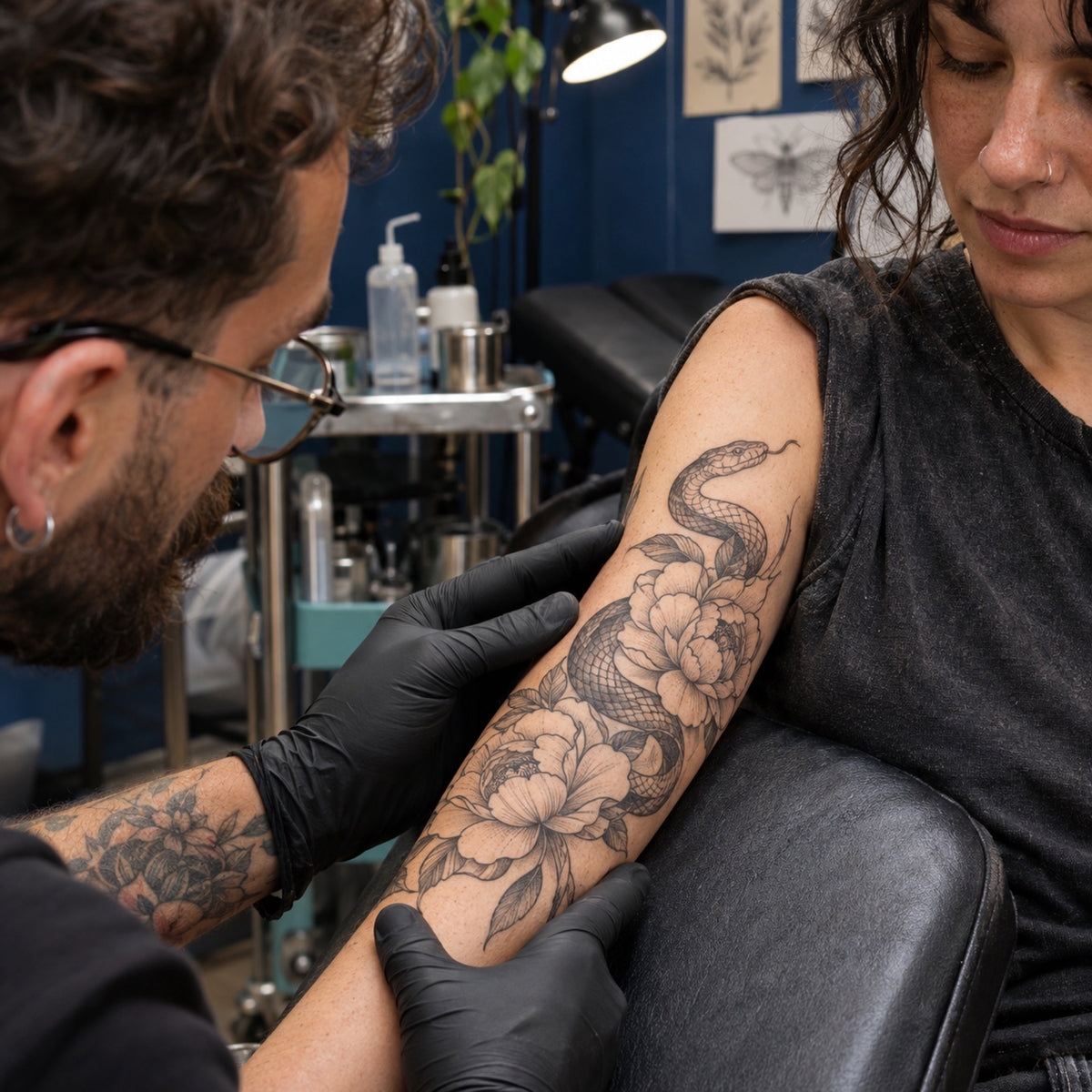
Used as directed on clean, intact skin, numbing cream is a common choice and plenty of artists are happy to work with it. Some would rather not, because a heavy or misused application can change how the skin feels to tattoo. I will give you the honest position: it can affect the work if it is used badly, it usually does not if it is used sensibly, and your artist's view comes first.
Why some artists are cautious
The thing you will hear most is about skin texture. Tattooing relies on the artist reading and stretching the skin, and some artists feel that a thick numbing layer, or cream left on far too long, can make the skin feel different to work with. That is artist experience and opinion rather than settled clinical fact, and opinion is genuinely split. Plenty of artists tattoo over properly prepared numbed skin every day with no issue.
So the takeaway is not "never use it". It is "use it correctly and tell your artist".
Does it change the ink or the lines?
There is no good evidence that numbing cream used as directed changes how ink settles or ruins line work. The problems that do get reported nearly always trace back to misuse: far too much cream, leaving it on well past the stated time, or putting it on skin that is not clean and dry. Follow the directions on your product, use the stated amount, and wipe it off properly before the session, and you take most of the risk off the table.
Does it affect healing?
Numbing cream is for intact skin before the work starts. Once your skin is broken it is a healing wound, and numbing cream does not belong on it unless an artist is specifically directing a product made for that stage. Aftercare, not numbing, is what carries your healing. If you want the full picture, read before, during and after: numbing cream and tattoo aftercare.
The rule that solves most of this
Agree it with your artist first. Message them before the appointment and ask whether they are happy for you to use a numbing cream, which one, and how they want it applied. Some artists have a product they trust and a method they prefer. Turning up having used something they did not expect is the quickest way to cause friction. A short conversation keeps everyone on the same page and protects your result.
Before you buy: check the No Pain Numb cream directions and warnings, then send them to your artist so you both agree the plan.
For external use only. Keep out of reach of children. Not suitable for anyone with heart conditions, high blood pressure, diabetes, pregnancy or skin diseases. Follow the directions on the product and your artist's guidance.
So, should you use it?
If you are anxious about pain, or booking a long or sensitive piece, numbing cream used correctly is a sensible tool. It takes the edge off without promising to remove all feeling. Pair it with an artist who knows you are using it, and you get the comfort without the downsides people worry about. For what to expect on the day, see does tattoo numbing cream actually work?.
FAQ
Will numbing cream ruin my tattoo? Used as directed on clean, intact skin, there is no good evidence it ruins the work. The issues people report usually come from over-application or leaving it on too long.
Do tattoo artists allow numbing cream? Some do, some prefer not to. Always ask your artist before the appointment which product they are happy with and how they want it applied.
Does numbing cream affect ink absorption? Concerns about skin texture are artist opinion rather than settled fact, and opinion is divided. Correct use lowers the risk.
Can I put numbing cream on a healing tattoo? No. Numbing products are for intact skin before the work. A healing tattoo is a wound and should follow your artist's aftercare, not numbing cream.
For external use only. Keep out of reach of children. This article is general guidance, not medical advice.